
Wait, Is It Anxiety or Perimenopause? Why Hormone-Informed Care is a Game Changer
- Natalie Desseyn
- Apr 6
- 5 min read
You’re staring at the ceiling at 3:00 AM. Again. Your heart is doing a nervous little tap-dance in your chest, and your brain is spiraling through a checklist of every awkward thing you said in 2014. You’ve always been "the responsible one," the high-achiever, the woman who gets things done. But lately, you feel like you’re vibrating at a frequency of "pure panic" for no apparent reason.
You might go to your primary care doctor and get told it’s just stress. You might see a traditional psychiatrist and walk away with a prescription for an SSRI. But deep down, something feels... different. It doesn't feel like the "normal" anxiety you've managed in the past.
If you are in your late 30s, 40s, or early 50s, there is a very real possibility that what you’re feeling isn't a "mental health crisis" in the traditional sense. It might be your hormones. Specifically, it might be perimenopause.
At Mindsett Mental Health and Wellness, we see this every day. Women come to us exhausted, feeling gaslit by a medical system that treats the mind and body as if they live in two different zip codes. But here’s the truth: your brain is a hormonal organ. When your hormones shift, your mental health shifts with them.
The "I'm Fine" Tax: When Masking Becomes Impossible
For years, many high-functioning women have paid what we call the "I'm Fine" tax. You push through the stress, you mask the fatigue, and you keep showing up. But when perimenopause hits, the biological "buffer" you used to have starts to thin out.
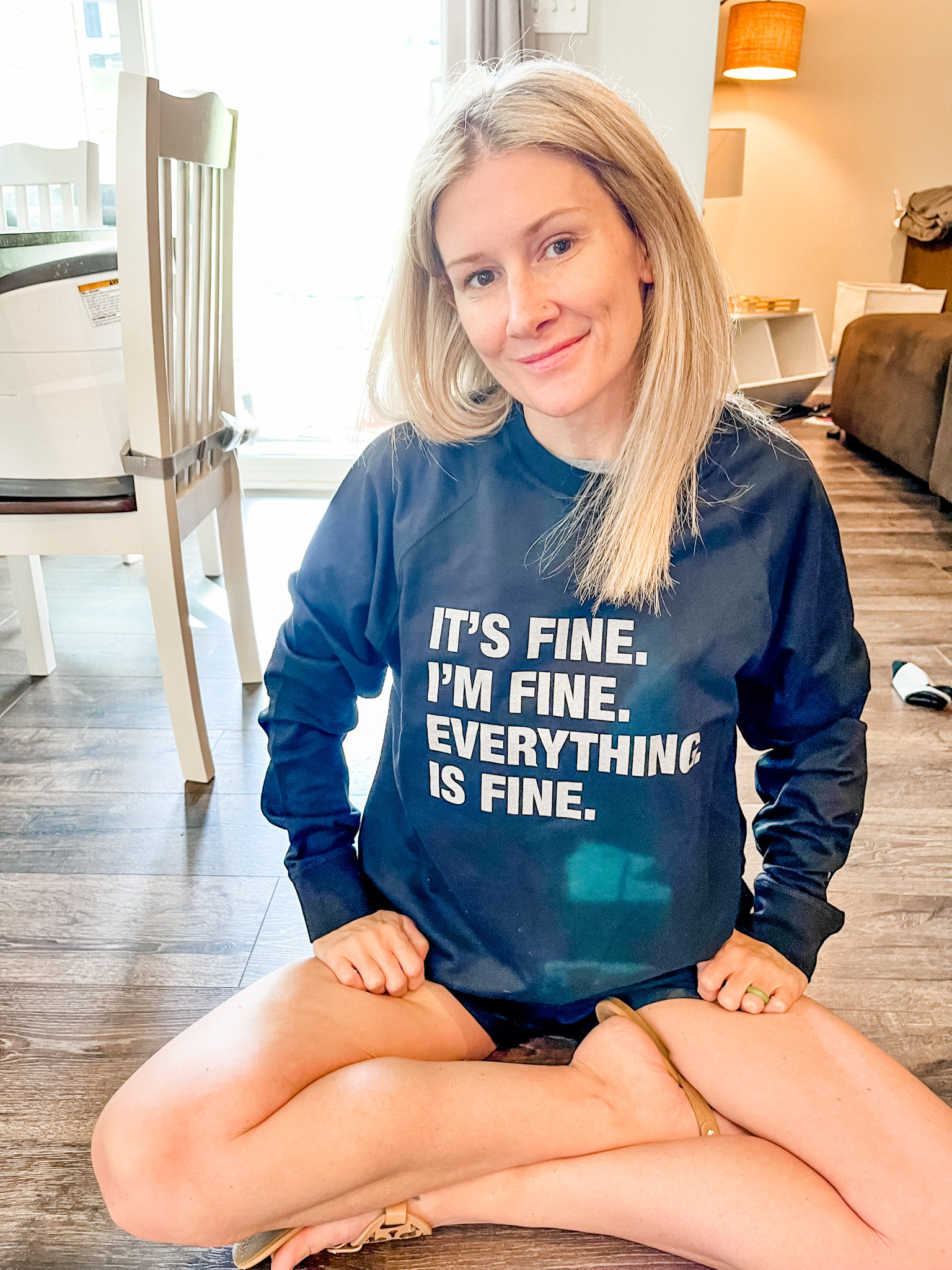
Suddenly, the strategies you used to stay calm, the yoga, the deep breaths, the sheer willpower, don't seem to work as well. This is often because perimenopause-related anxiety is driven by a different "why" than primary anxiety. While high-functioning women are experts at unmasking, no amount of mental grit can override a plummeting progesterone level.
Is It Anxiety or Perimenopause? The Checklist
Distinguishing between primary anxiety (Generalized Anxiety Disorder) and perimenopause-related anxiety is crucial because the treatment paths are worlds apart. Here are the key differences:
1. The Timing (The "Why Now?" Factor)
If you’ve never struggled with clinical anxiety before and it suddenly appears in your 40s, that’s a massive red flag for hormonal shifts. Perimenopause-related anxiety often fluctuates with your menstrual cycle. You might feel "fine" for two weeks and then hit a wall of debilitating dread the week before your period.
2. The Physical Emphasis
While all anxiety has physical symptoms, hormone-driven anxiety tends to be very "body-based." You might experience:
Heart palpitations or a racing pulse.
Sudden "zaps" of heat or night sweats.
Dizziness or a feeling of being "off-balance."
Extreme breast tenderness or joint pain alongside the panic.
3. The Sleep Connection
If your anxiety is primarily tied to sleep, meaning you feel okay during the day but become a wreck because you can't stay asleep, it’s often hormonal. Progesterone is your brain’s natural "Valium." As it drops during perimenopause, your ability to stay in a deep, restful state evaporates, leaving you hyper-vigilant and anxious.

The Science: Why Your Brain is Freaking Out
Let’s talk about what’s actually happening under the hood. In perimenopause, your estrogen and progesterone levels aren't just "low", they are erratic. They are swinging wildly like a pendulum.
Progesterone Decline: Progesterone is a neurosteroid that interacts with GABA receptors in the brain. GABA is the neurotransmitter responsible for "calming things down." When progesterone drops, your brain literally loses its natural ability to self-soothe.
Estrogen Fluctuations: Estrogen helps regulate serotonin and dopamine (your "feel-good" chemicals). When estrogen levels dip or spike unpredictably, your mood regulation goes out the window.
Research shows that up to 50% of women in perimenopause experience mental health symptoms like anxiety. Yet, because many providers aren't trained in hormone-informed care, these women are often told they are just "depressed" or "stressed." In fact, the mental health system often gaslights women by ignoring these biological transitions.
Why Hormone-Informed Care is the Game Changer
Traditional psychiatry often looks at the brain in a vacuum. You have anxiety? Here is an anti-anxiety med. You can't sleep? Here is a sedative.
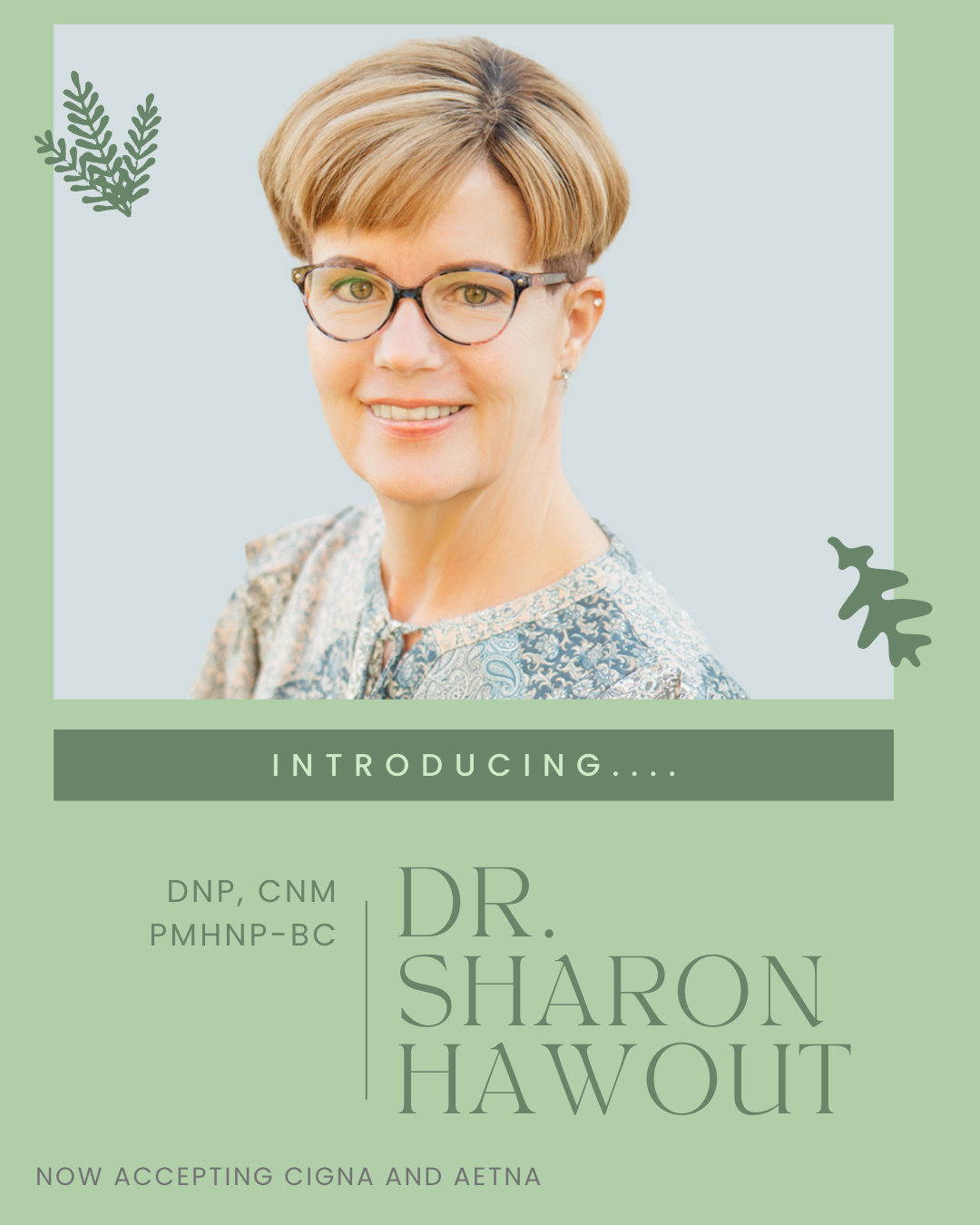
But at Mindsett, we take a different approach. We look at you as a whole person. This is why having a Double Board-Certified NP (in both Family Medicine and Psychiatric Mental Health) is so important.
When we look at your case, we aren't just looking for a diagnosis; we’re looking for the root cause. If your anxiety is caused by vasomotor symptoms (like hot flashes) keeping you up at night, an SSRI might help a little, but it won’t fix the underlying issue. Addressing the hormonal fluctuation, sometimes through Hormone Replacement Therapy (HRT) or specific nutraceuticals, can often resolve the anxiety without the need for lifelong psychiatric medication.
We also specialize in expert deprescribing support. Many women are put on antidepressants in their 30s and stay on them for decades, only to find they don't work anymore once they hit perimenopause. We help you navigate those shifts safely.
Moving Beyond "Just Napping"
When you’re in the thick of it, people tell you to "just practice self-care." They suggest a bubble bath or a green juice. But as we’ve said before, green juice won’t fix every mental health issue.
If your nervous system is dysregulated because of a hormonal shift, you need more than a "reset." You need a strategy.
1. Track Everything
Don't just track your period; track your moods, your sleep, and your physical symptoms. You’ll likely start to see a pattern. Bringing this data to a hormone-informed provider makes it much easier to get an accurate diagnosis.
2. Prioritize Nervous System Regulation
Since your brain is losing its natural "chill pill" (progesterone), you have to manually assist your nervous system. This means aerobic exercise (proven to help perimenopausal anxiety), cold exposure, or weighted blankets. Practical tips for enhancing mental health can provide a foundation, but they work best when paired with medical insight.
3. Advocate for a Whole-Person Approach
If your provider isn't asking about your cycle, your night sweats, or your family history of early menopause, they are missing half the picture. You deserve a provider who understands that burnout, depression, and ADHD can all look similar, especially when hormones are involved.

You Aren't "Going Crazy"
The most common thing we hear from women in this stage of life is, "I feel like I’m losing my mind."
You aren't losing your mind. You are experiencing a significant biological transition that has been historically under-researched and dismissed. Whether you need medication management, hormone-informed therapy, or just someone to finally say, "Yes, this is real, and here is why," we are here for you.
Mental wellness isn't a destination; it's a tune-up. And just like a car, sometimes your "engine" (your hormones) needs a professional look to keep everything running smoothly. If you're ready to stop guessing and start feeling like yourself again, let's chat.
You’ve spent your life taking care of everyone else. It’s time to apply that same compassionate care to yourself. Your brain: and your hormones( will thank you.)
Comments